What are the benefits of honey and propolis for the prevention of dental problems

 Loading...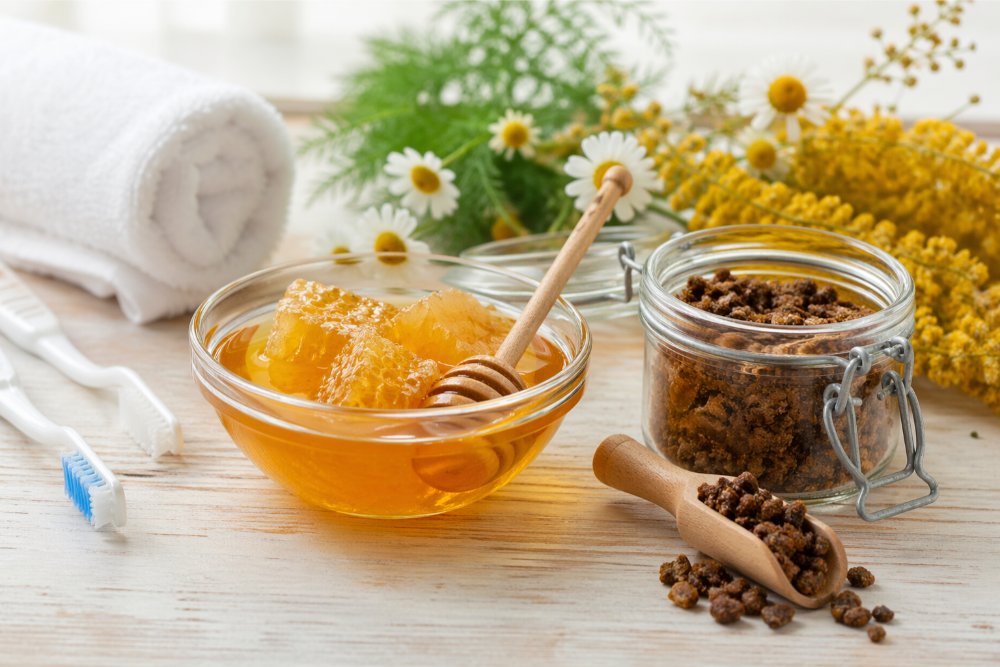
Honey and propolis in daily dentistry
When I am asked, can honey and propolis really be good for teeth?, I am in no hurry to give a definite answer. Because there is no pure magic here. There is biochemistry, microbiology and a bit of… experience, accumulated over years of practice.
Frankly, I have seen patients more than once, who fanatically treated the gums only with "folk methods", and it ended badly. But at the same time - and this is important - there is another side. Honey and propolis do contain substances, which work. Antibacterial, inflammatory, even slightly pain-relieving.
And this is where the interesting begins. Because if they are used wisely, as an auxiliary tool in the prevention of dental problems, they can have a very tangible effect. Not instead of a doctor. Together with the doctor.
There is something almost ancient about it. People treated the oral cavity with beekeeping products long before the advent of modern dentistry. AND, surprisingly, some of these approaches have survived the centuries for a reason.
Biological power of beekeeping products
If you put aside romance and look under a microscope, everything becomes quite pragmatic. Honey is not just a sweet mass. It is a complex mixture of enzymes, organic acids, flavonoids and natural antiseptics.
Propolis is even more interesting. This is actually the "defense system" of the hive. Bees use it, to sterilize your environment. And this property is directly transferred to the human oral cavity.
I remember one case - a patient with chronic gingivitis, which, in addition to standard treatment, started using propolis tincture. Not fanatically, but that's right, dosed. After a few weeks, the inflammation decreased much faster, than we expected.
This is not a coincidence. Propolis contains flavonoids and phenolic compounds, which inhibit the growth of bacteria, in particular those, causing caries and gum disease.
But there is a nuance here. High biological activity also means potential risks. Allergies, mucosal irritation is also a reality. So mindless use is a bad idea.
Influence on the microflora of the oral cavity
The oral cavity is an ecosystem. Not sterile, and it shouldn't be like that. Hundreds of species of bacteria live here, and most of them are normal.
The problem starts then, when the balance is disturbed.
Honey and propolis affect exactly this balance. They don't "kill everything in a row", as aggressive antiseptics, rather suppress pathogenic microorganisms. This is a subtle difference, but it is fundamental.
I was surprised myself, when I first immersed myself in research on this topic. turns, propolis can reduce the activity of Streptococcus mutans — bacteria, which plays a key role in the development of caries.
honey, despite its sweetness, also has antibacterial properties. This is especially true of natural products, unrefined honey. It contains the enzyme glucose oxidase, which produces hydrogen peroxide in small amounts. That is enough, to inhibit bacteria, but do not harm the tissues.
Sounds good. But there is one "but". Honey is sugar. And if you just leave it on your teeth, the effect will be the opposite.
That is why not only the substance is important, but also the method of its use.
Propolis and gum health
As a dentist, I value propolis the most precisely for its effect on the gums. Inflammation, bleeding, initial stages of periodontitis - here it works especially well.
Its anti-inflammatory properties are confirmed by clinical studies. It reduces swelling, reduces pain, improves tissue healing. And this is not marketing - these are real observations.
You know, sometimes patients come and say, that "everything has been tried". And when propolis is added to the standard treatment, changes appear faster. Not always, but often.
There is one more point, which is rarely discussed. Propolis stimulates local immunity. This means, that the gum tissues begin to respond better to the bacterial load.
But it is important to understand that this is not an independent treatment. If there is periodontitis, professional intervention is indispensable. Propolis is support, rather than the basis of therapy.
Honey and caries risk
This is where the fun begins, and, frankly, a bit controversial.
On the one hand, honey has antibacterial properties. On the other hand, it contains simple sugars, which are a nutrient medium for bacteria.
Therefore, the answer is simple and complex at the same time. Honey can be good for teeth, but only if used correctly.
If it is used as part of the diet, there are no problems. But if you leave it on the teeth, do not rinse your mouth, do not brush your teeth - the risk of caries increases.
I often tell patients: honey is not the enemy, but not a magic panacea either. This is a product, which needs a culture of consumption.
And one more point. Frequency is more important than quantity. Small portions of honey many times a day are worse, than one serving, after which you rinsed your mouth.
This is simple logic, but it is often ignored.
Practical application in prevention
In real life, everything looks much simpler, than in scientific articles.
Propolis is used in the form of tinctures, sprays, ointments. Honey — as a food product or sometimes as a component of home remedies for oral care.
But I always emphasize that there is no need to complicate things.
Sometimes it is enough to simply add a rinse with propolis to basic hygiene. And the effect will already be there. Little, but stable.
Honestly… most dental problems are not solved by exotic remedies, and regularity. Brushing teeth, thread, preventive examinations.
Honey and propolis are allies here. Not more, but no less.
The role of modern dentistry
There is one point, which I can't avoid.
People often look for "natural alternatives" to dentistry. And I understand why. Fear, distrust, negative experience.
But the truth is, that even the best beekeeping products cannot replace professional treatment.
Caries will not disappear from honey. Periodontitis cannot be cured by propolis.
This is important to say directly.
Instead, modern dentistry and natural remedies can work together. And this, apparently, the most reasonable approach.
Experience of Ukrainian Dentistry
In my practice, I have encountered clinics more than once, which combine evidence-based medicine with a careful attitude to natural methods. And here it is worth mentioning "Ukrainian Dentistry".
This is an example of a clinic, where "alternative" approaches are not dismissed, but they do not replace treatment with them. Doctors work there, who understand balance.
I like their approach. They are not selling illusions. If treatment is needed, it is carried out. If support methods can be added, including the use of propolis or other natural remedies — it is done correctly.
And one more nuance. They pay a lot of attention to prevention. Not then, when it hurts, and earlier.
It, frankly, most valuable in dentistry.
Where is the line between benefit and myths
And here I will say a little harshly.
There are many exaggerations surrounding honey and propolis. They are often presented as a universal remedy for all dental problems. This is not so.
But devaluing them is also a mistake.
The truth is somewhere in the middle. And she is quite down to earth.
Honey and propolis can reduce inflammation, inhibit bacteria, maintain gum health. But they do not replace professional hygiene and treatment.
And you know… there is nothing disappointing about that. Vice versa. This means, that we have more tools, than you think.
The main thing is to use them wisely. And don't look for magic solutions there, where system work is required.
Because healthy teeth are more than one product and more than one procedure. It's a habit. And a little discipline.